Planning, Urban Design, and Architecture for Climate Action
- Share
-

-

-

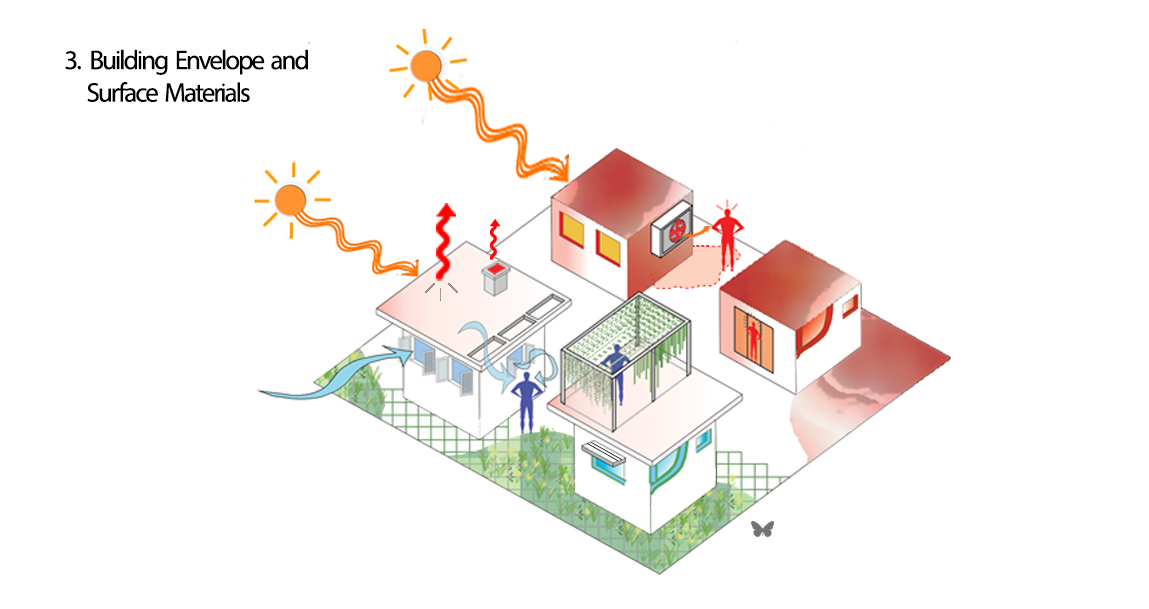
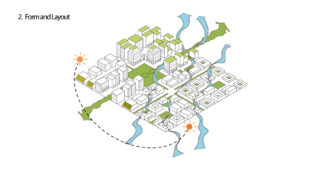
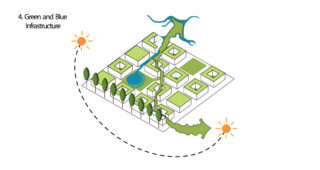
Confronting the challenges of a rapidly urbanizing world threatened by climate change requires expanding on the traditional influence and capabilities of architects, landscape architects, and urbanists. We must integrate climate science, natural systems, and compact urban form to configure dynamic, desirable, and healthy communities. Climate science is clear, and the urgency is evidence-based. Cities like New York are stepping up to advance climate action, making the timing of this event critical.
Please join the Urban Climate Change Research Network (UCCRN), the AIANY Design for Risk and Reconstruction Committee, and the AIANY Planning and Urban Design Committee for the New York City launch of Planning, Urban Design, and Architecture for Climate Action (PAD), a climate change and cities assessment by Cambridge University Press bringing together authors from 23 cities across 15 countries.
PAD is the Planning, Architecture, and Urban Design element of UCCRN’s Third Assessment Report on Climate Change and Cities (ARC3.3), a global synthesis of the latest science and practice on urban climate change, developed to support more resilient, equitable, and sustainable cities worldwide.
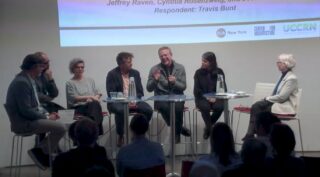
The program will focus on applying climate science and risk projections into actionable guidance for architects, planners, and urban designers. Panel members will draw from their contributions to the publication and comprise NYC-based practitioners, researchers, public agencies, and the New York City Panel on Climate Change (NPCC). Case studies and evidence-based factors will be used as tools to assess ways of mitigating the impact of climate change in New York City.
This panel bridges science and urban design practice. We’ll explore the potential for urban design workshops to conceive climate-embedded prototypes that can be implemented at the urban district scale. The panel will argue for prioritizing cost-effective planning and design measures that help mitigate emissions while enhancing adaptive benefits. Embedding climate change in planning and urban design delivers co-benefits across multiple sectors and spatial scales. Doing so makes it possible to design people-centered public spaces that enhance energy efficiency, improve public health and quality of life, and create social resiliency.
Program Highlights:
- Opening remarks from NYC leadership on the city’s current climate policy and planning context
- Introduction to ARC3.3 and the PAD element by UCCRN
- Panel discussion with PAD authors and city practitioners
Opening Remarks:
Paul Onyx Lozito, Deputy Executive Director of Planning, Adaptation, and Environmental Justice, NYC Mayor’s Office of Climate & Environmental Justice
Speakers:
Ilana Judah, AIA, OAQ, LEED BD+C, CPHC, Americas Climate and Sustainability Leader, Arup
Martina Kohler, Asst. Professor, Director BFA Architectural Design, Parsons School of Design
Mattia Leone, Associate Professor of Architecture, University of Naples Federico II
Paul Onyx Lozito, AICP, Deputy Executive Director, NYC Mayor’s Office of Climate & Environmental Justice; President, American Planning Association
Franco Montalto, Ph.D., P.E., Professor of Civil, Architectural, and Environmental Civil Engineering, Drexel University and President and Founder of eDesign Dynamics LLC
Juan Camilo Osorio, PhD., Associate Professor at Pratt Institute School of Architecture
Jeffrey Raven, Ph.D., FAIA, LEED BD+C, Assoc. Professor of Architecture, School of Architecture & Design, New York Institute of Technology; Principal, RAVEN A+U
Cynthia Rosenzweig, Ph.D., Senior Research Scientist at NASA Goddard Institute for Space Studies, Columbia Climate School; Co-director, Urban Climate Change Research Network
William Solecki, Ph.D., Professor, Earth and Environmental Sciences, Hunter College, City University of New York; Co-director, Urban Climate Change Research Network
Joel Towers, AIA., President, The New School. University Professor of Architecture and Sustainable Design, Parsons School of Design
Light refreshments will follow the program. Networking with authors and speakers is encouraged.
Organized by:
AIANY Design for Risk and Reconstruction Committee; AIANY Planning and Urban Design Committee; AIANY Committee on the Environment; Urban Climate Change Research Network (UCCRN)
Save The Date
![Francis Kere Spirits Out of Trees book cover]()
-
Oct 05, 2026